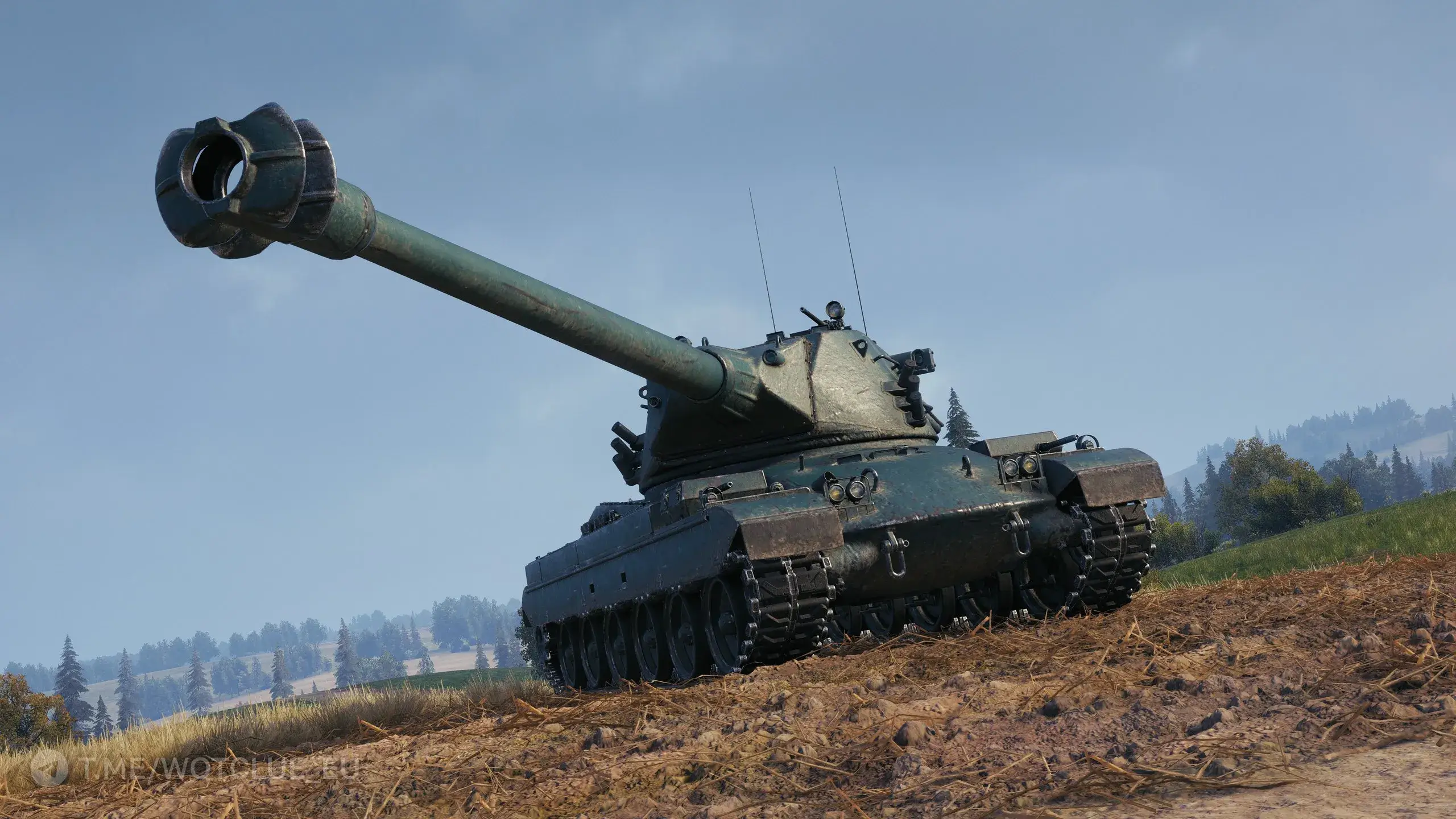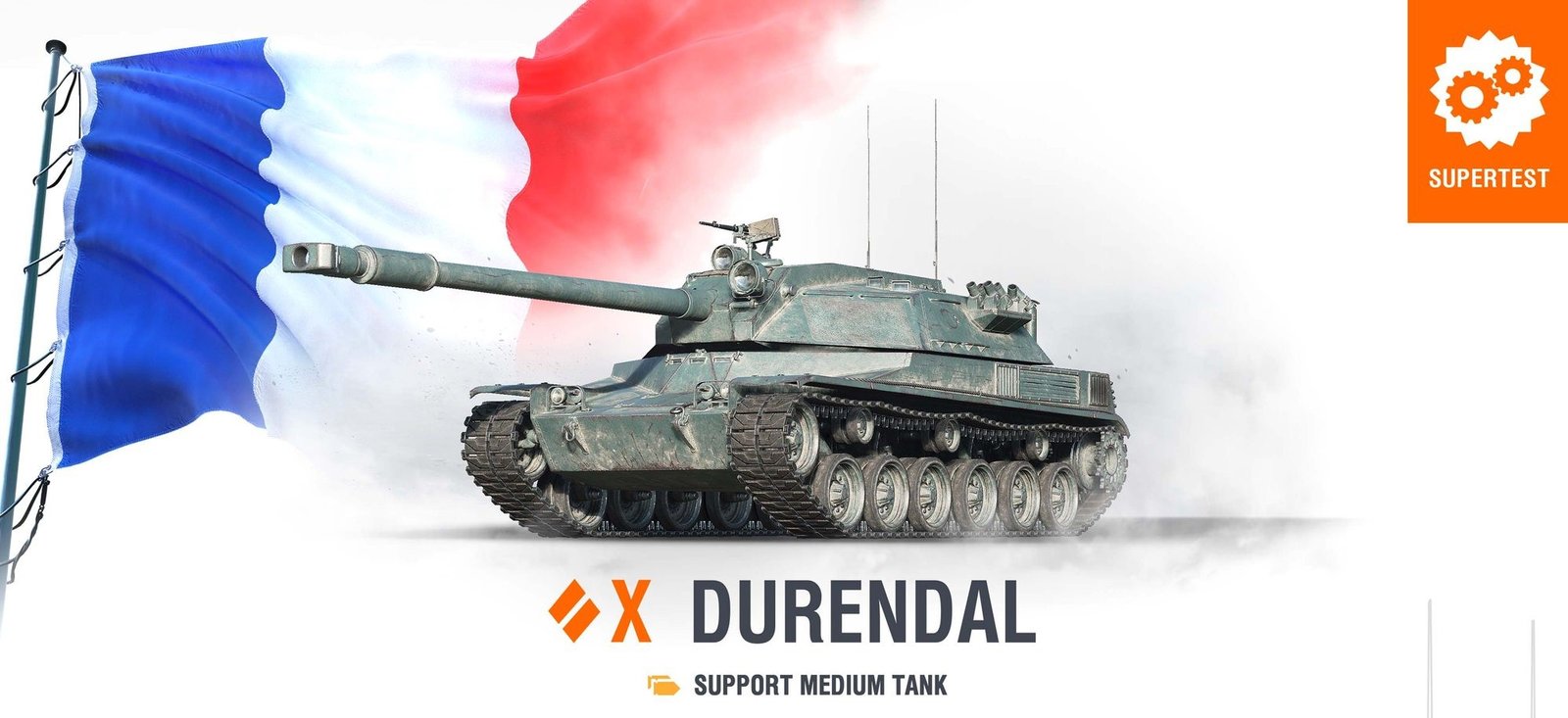
Named after the legendary sword of Roland from French medieval epic poetry, this vehicle combines exceptional mobility with a unique firing system that allows it to deliver significant damage in extremely short timeframes, but with very bad penetration values. For players who appreciate French autoloader philosophy but crave something genuinely different, the Durendal offers an intriguing variation on the theme that emphasizes burst trading over sustained clip damage
Dual-Container Autoloader: Unprecedented Burst Speed
The Durendal’s defining characteristic is its unusual autoloading system with two separate shell containers:
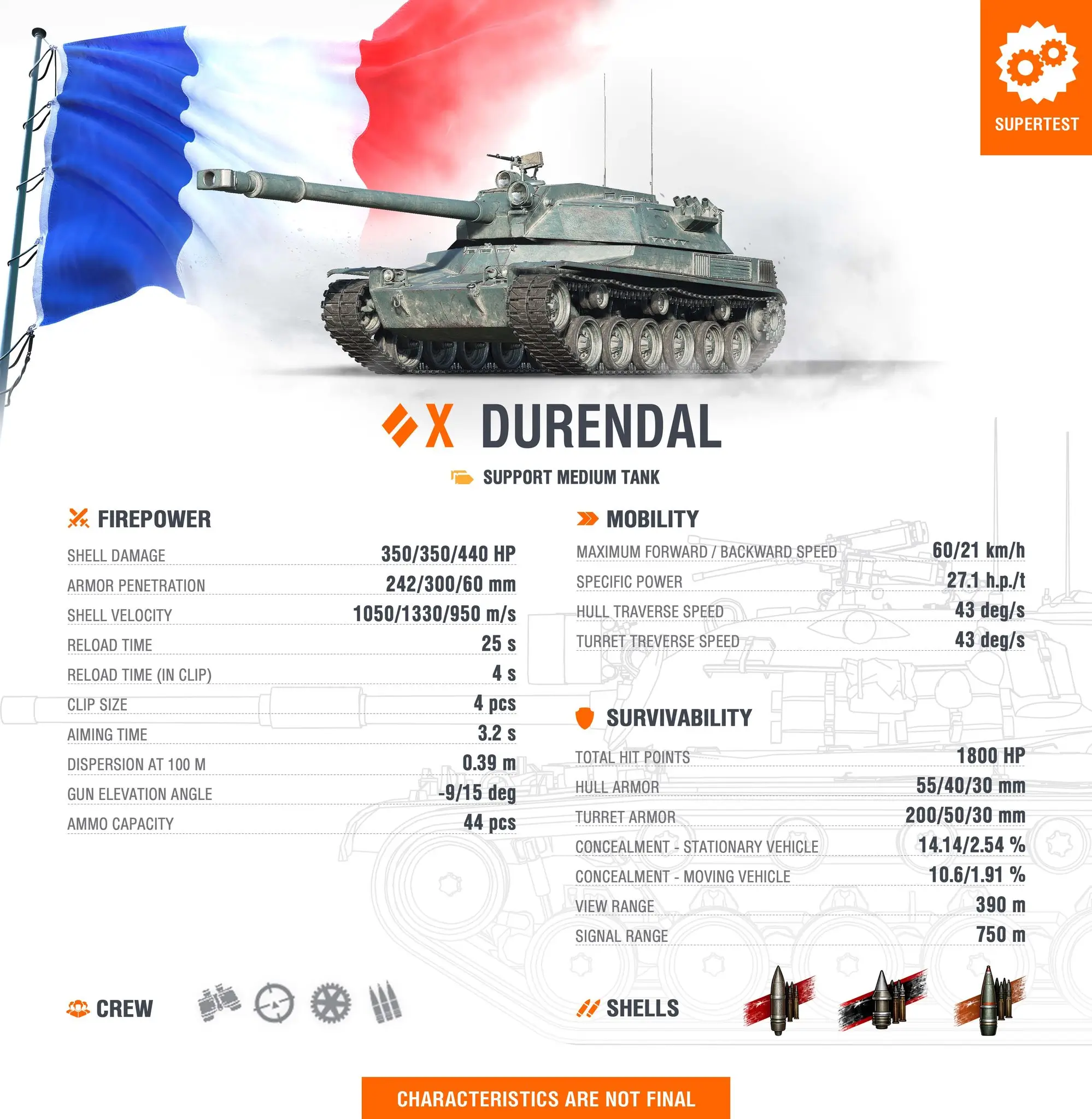
Poor penetration: this is quite unusual for a French tank; it has really bad penetration values. Only 242 mm on standard rounds and only 300 mm on premium rounds. Going through the front of the Tier 10 and 11 tanks is going to be very hard.
Two-Container Configuration: Unlike traditional autoloaders with a single drum or magazine, the Durendal features two independent containers that work in tandem to deliver shells. This configuration enables the unique firing pattern.
Rapid Two-Shell Bursts: The dual containers allow for extremely rapid two-shell bursts, presumably with minimal delay between the shots. This burst capability enables dealing significant damage in timeframes that give opponents almost no opportunity to respond.
4-Second Intra-Clip Reload: After firing the initial rapid burst from one container, there’s a 4-second reload before you can fire the next two-shell burst from the second container. This creates a distinctive rhythm: burst, brief pause, burst, long reload.
25-Second Full Reload: The complete reload cycle takes 25 seconds to replenish both containers. This lengthy reload creates extended vulnerability periods between full clip cycles, demanding careful planning and positioning.
Damage Per Shell: While specific alpha damage isn’t provided in the initial information, community discussion suggests 350 HP per shell. If accurate, this creates 700 HP bursts every 4 seconds, with a total clip potential of 1,400 HP.
The dual-container system creates a unique trading pattern unlike any existing French autoloader, emphasizing rapid successive bursts rather than traditional clip dumps.
Exceptional Mobility: Strike from Unexpected Angles
The Durendal brings impressive mobility characteristics:
60 km/h Top Speed: The maximum forward speed of 60 km/h places the Durendal among the faster Tier X mediums. This speed enables rapid position changes, aggressive flanking maneuvers, and quick escapes when situations deteriorate.
21 km/h Reverse Speed: The reverse speed is adequate for tactical retreats, though not exceptional by modern medium tank standards. It’s sufficient for backing out of engagements after delivering bursts but won’t save you from committed mistakes.
Agility Focus: The mobility is specifically noted as compensating for the vehicle’s relatively light armor. This design philosophy emphasizes positioning, map awareness, and exploitation of opportunities over direct confrontation.
Unexpected Angle Attacks: The combination of high speed and burst damage enables the Durendal to strike from angles opponents don’t anticipate. Appear suddenly, deliver devastating double-bursts, and relocate before effective response arrives.
The mobility package ensures the Durendal can consistently find favorable engagement conditions rather than being forced into unfavorable fights.
Armor Profile: Light Protection
The Durendal follows French medium tank tradition with minimal armor on the hull:
Relatively Light Armor: While the turret has around 200 mm of armor at the front, the hull is really poor at only 55 mm.
Mobility as Defense: The armor philosophy trades protection for speed and firepower. Survival depends on not being hit rather than bouncing shots when hit.
Support Medium Classification: The designation as a “support medium” reinforces the light armor profile. This isn’t a tank for frontline brawling or leading charges—it’s designed for second-line positioning and opportunistic strikes.
HP Pool Considerations: While specific HP values aren’t provided, expect a typical Tier X medium health pool—enough to survive some mistakes but not enough to sustain prolonged trading.
The armor demands perfect positioning awareness and careful engagement selection—every shot taken is potentially fatal damage.
Tactical Considerations
The Durendal’s characteristics create specific tactical guidelines:
Burst Trading Specialist: The rapid two-shell bursts enable exceptional trading in peek-a-boom situations. Expose yourself briefly, deliver 700 HP, retreat before opponents can respond effectively.
Container Management: Understanding the dual-container system is crucial. You have two rapid bursts before the lengthy 25-second reload. Plan which targets receive each burst before committing.
Mobility Exploitation: Use the 60 km/h speed to access unexpected positions. Flanks that seem safe from normal mediums suddenly face rapid double-bursts from angles they didn’t anticipate.
Support Positioning: The light armor and burst damage suggest second-line positioning where you can leverage teammates’ HP to create shooting opportunities while minimizing exposure.
Timing Windows: The 4-second gap between bursts creates specific timing windows. After the first burst, you have a brief moment to reassess before committing the second burst or repositioning.
Playstyle Implications
The Durendal rewards commanders who understand rhythm-based combat:
Burst Rhythm Mastery: Success requires internalizing the fire-pause-fire-reload rhythm. Deliver the first burst, evaluate the tactical situation during the 4-second pause, execute the second burst, then immediately seek cover during the 25-second reload.
Opportunistic Aggression: The 60 km/h speed enables rapid exploitation of battlefield opportunities. When enemies focus elsewhere or expose themselves, the Durendal can arrive quickly and punish with devastating bursts.
HP Conservation: With light armor and moderate HP, every point of damage taken reduces battlefield longevity. Play intelligently to maximize survival time and clip cycles.
Target Prioritization: Identify which enemies deserve the dual bursts before engaging. Wasting containers on low-value targets leaves you defenseless during the lengthy reload against priority threats.
Commanders looking to master the Durendal should consider:
- Identifying opportunities for double-burst engagements before committing
- Using the 60 km/h speed to reach unexpected positions
- Timing bursts during enemy reload cycles or distractions
- Immediately seeking cover after exhausting both containers
- Supporting teammates who can protect you during the 25-second reload
- Leveraging the rapid bursts for finishing wounded high-priority targets
- Avoiding prolonged engagements where the light armor becomes a liability
- Using mobility to choose every engagement on favorable terms
Comparison to Existing French Autoloaders
The Durendal must compete with established French autoloaders:
vs Bat-Châtillon 25t: The Bat-Châtillon offers a traditional 5-6 shell clip with longer sustained fire. The Durendal trades clip size for more rapid bursts in shorter timeframes.
vs AMX 50 B: The heavy tank AMX 50 B delivers higher alpha per shell and larger total clip damage. The Durendal counters with superior mobility and potentially faster burst delivery.
vs Progetto-style Autoreloaders: Italian autoreloaders offer flexibility between burst and sustained fire. The Durendal’s dual-container system creates a different rhythm focused specifically on rapid successive bursts.
Unique Niche: The two-container rapid-burst system creates a genuinely unique niche—no other tank delivers damage in this specific pattern.
What Sets the Durendal Apart
The Durendal occupies unprecedented territory in French tank design:
First Dual-Container Autoloader: Introduces the two-container mechanic to World of Tanks, creating an entirely new autoloader variant.
Rapid Burst Emphasis: Unlike traditional autoloaders that spread shots across longer timeframes, the Durendal optimizes for ultra-rapid successive bursts.
Legendary Naming: The connection to French medieval epic poetry gives the tank cultural significance beyond pure statistics.
Support Medium Identity: Clearly designed for second-line support rather than frontline brawling, with characteristics that reward intelligent positioning over armor reliance.
Balance Considerations
Several factors suggest potential adjustments during testing:
Burst Damage Power: If the rapid two-shell bursts with minimal delay prove too strong in peek-a-boom situations, expect increases to the inter-burst timing.
Mobility Balance: The combination of 60 km/h speed and rapid bursts might enable too much unpunished damage. Speed reductions could occur if testing reveals excessive power.
Container Timing: The 4-second interval between bursts and 25-second full reload will be carefully scrutinized to ensure the burst pattern isn’t overwhelming or underwhelming.
Alpha Damage: Community discussion suggests 350 HP per shell. This might be adjusted up or down based on testing data regarding overall performance.
Final thoughts
The Durendal represents bold innovation in French autoloader design—taking the nation’s autoloader philosophy and creating an entirely new variant focused on ultra-rapid successive bursts rather than traditional clip dumps. The dual-container system delivers damage in a rhythm unlike any existing tank, rewarding commanders who master the burst-pause-burst-reload pattern.
For commanders who appreciate French autoloader gameplay but want something genuinely different, the Durendal offers an intriguing package. The requirement to leverage 60 km/h mobility while managing dual containers and surviving with light armor creates a high skill ceiling that rewards mastery.
However, the Durendal’s success depends entirely on balance execution. The rapid-burst mechanic could prove either too powerful in skilled hands or too limited if the timing and damage values aren’t perfectly tuned. Community reception suggests skepticism about whether the current iteration offers compelling advantages over established alternatives.
Whether you’re excited about France’s dual-container innovation or concerned it’s just another French medium without sufficient differentiation, the Durendal represents Wargaming’s continued experimentation with autoloader variants. If the legendary sword’s name proves prophetic, the Durendal will cut through opponents with devastating efficiency. If not, it risks becoming another curiosity that fails to find its place in the competitive Tier X medium landscape.